Bath time and water safety
Short answer
Stay within arm's reach of a baby in water at all times, even for a second, and never leave a baby in the care of an older child in the bath. Fill the bath with about 2 inches of water at around 100°F (38°C), and gather everything you need before you start. Bath seats and rings do not prevent drowning.
Bath time can be one of the nicest parts of the day. It is also one of the few everyday moments where a baby can come to serious harm within seconds. Drowning is quick and silent. A baby can drown in a couple of inches of water, without splashing or crying out.
The good news is that bath safety comes down to a few habits.
Bathing a newborn
Until the umbilical cord stump falls off, usually within one to three weeks, give your baby sponge baths. Lay them on a towel on a flat surface, keep them wrapped in a second towel, and wash one part at a time with a soft cloth and warm water.
After that, you can use a small baby tub or the sink. Newborns do not need a bath every day. The AAP says three times a week is plenty in the first year, and more often can dry out their skin. In between, clean the face, neck folds and diaper area.
Before you start
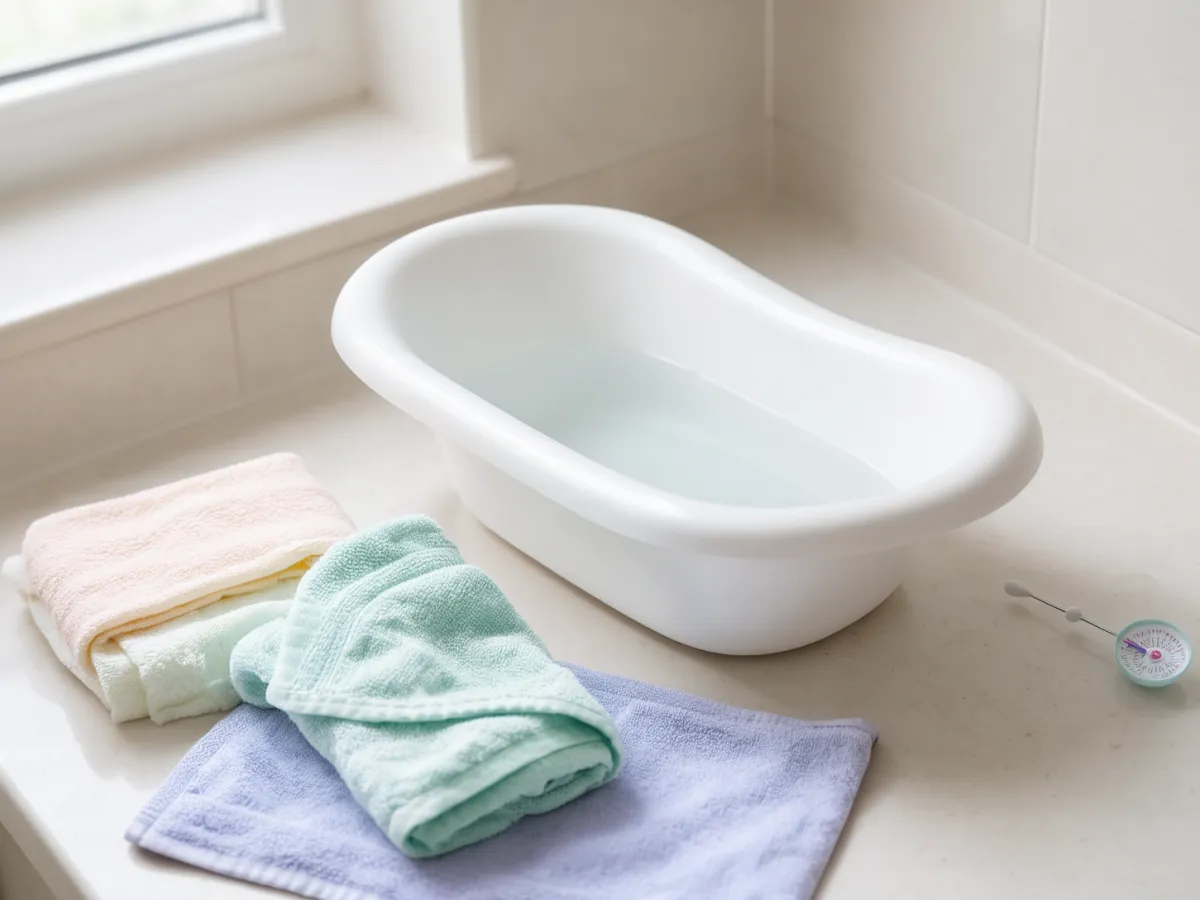
Set everything out within reach before the baby goes in the water: a towel, a washcloth, a mild baby soap if you use one, a clean diaper and clothes. If you realize you have forgotten something, wrap the baby in the towel and take them with you.
Check the water temperature.
- Aim for about 100°F (38°C), warm but not hot. A bath thermometer helps. Without one, test with your wrist or elbow, which are more sensitive than your hand.
- Run the cold water first, then add hot, and mix well to avoid hot spots.
- Set your home's water heater to 120°F (49°C) or lower. At hotter settings, tap water can scald a child's skin in seconds.
Use only about 2 inches of water for a baby, and keep it shallow for toddlers too.
During the bath
The AAP calls this touch supervision: keep a hand on or within arm's reach of your baby the whole time they are in or near water.
- Do not leave, even for a moment, to answer the phone or the door or to fetch a towel. If you must go, take the baby with you.
- Do not leave a baby in the bath with an older brother or sister in charge. Children are not able to watch a baby or react fast enough in an emergency.
- Support your baby's head and neck with one hand, and use the other to wash.
- Wet babies are slippery, so a good grip under the arm, with your wrist behind the head, works well.
Bath seats and rings
Bath seats and rings hold a baby upright in the tub. They can make bathing easier, but they are not safety devices. Babies have drowned after slipping out of them or after the seat tipped over, often while a parent stepped away for a moment. A bath seat does not replace you being there.
After the bath
Empty the tub as soon as the bath ends. Lift your baby out onto a towel straight away, and dry and dress them in a warm room.
Water around the home
Babies and toddlers can drown in any container that holds water.
- Empty buckets, coolers, paddling pools and basins right after use, and store them upside down.
- Keep bathroom doors closed and fit a lock on the toilet lid. A toddler who leans in head-first can fall in and cannot get out.
- Keep an eye on pet water bowls and fish tanks with toddlers around.
Pools and open water
Drowning is the leading cause of death for children aged one to four in the United States, according to the CDC. Most of these drownings happen in home swimming pools.
- Fence pools on all four sides, separating the pool from the house and yard, with a self-closing, self-latching gate. A fence that uses the house as one side leaves a way in through the back door.
- Choose one adult as the "water watcher" at every gathering near water, whose only job is to watch the children, without a phone or a drink. Swap every 15 minutes or so.
- Keep children who cannot swim within arm's reach in and near water.
- Use a properly fitting life jacket approved by the US Coast Guard on boats and near open water. Inflatable armbands and pool toys are not life jackets.
- Learn CPR. Seconds count.
The AAP says swim lessons can lower the risk of drowning for children from age one who are ready for them. Lessons do not make a child "drown-proof," so supervision and fencing still matter.
Sources
- American Academy of Pediatrics, Bathing your baby and Water safety
- Centers for Disease Control and Prevention, Drowning prevention
- US Consumer Product Safety Commission, Pool Safely
This page is general information to help you ask good questions. It is not medical or legal advice. Your pediatrician, midwife or a lawyer in your state can tell you what applies to you. Last checked 16 November 2026.