Car seats, from the hospital ride on
Short answer
Keep your child rear-facing for as long as their seat allows, which for most children is well past age two. Put the seat in the back, never in front of an active airbag. The harness should be snug enough that you cannot pinch a fold of strap at the collarbone.
Car crashes are a leading cause of death for children in the United States. A car seat that fits and is put in correctly cuts that risk sharply. The National Highway Traffic Safety Administration (NHTSA) says car seats reduce the risk of fatal injury by 71% for babies and 54% for toddlers in passenger cars.
The catch is the word "correctly." When NHTSA checked thousands of car seats in real cars, it found mistakes in close to half of them, mistakes that could make the seat protect a child less well. Most of the mistakes are easy to fix once you know what to look for.
The first ride home
Your baby needs a car seat for the trip home from the hospital, and many hospitals check that you have one. Install it a few weeks before your due date so you are not learning in a parking lot. If you can, have it checked by a certified Child Passenger Safety Technician. NHTSA has a free car seat inspection locator, and many fire stations, hospitals and police departments hold check events.
Which seat at which age
Children move through four stages. The AAP's advice is to keep each child in each stage for as long as possible, until they reach the top height or weight limit printed on their seat, rather than moving up at a set birthday.
| Stage | Who it is for | Move on when |
|---|---|---|
| Rear-facing seat | Babies and toddlers | They reach the seat's rear-facing height or weight limit |
| Forward-facing seat with a five-point harness | Toddlers and preschoolers | They reach the harness limit |
| Booster seat | School-age children | The adult belt fits without it, usually at about 4 feet 9 inches tall, often between 8 and 12 |
| Seat belt in the back seat | Older children | Children under 13 should still ride in the back |
Rear-facing for as long as possible
In a frontal crash, the most common serious kind, a rear-facing seat cradles the head, neck and spine and spreads the force across the whole back. A young child's neck is not strong enough to hold back a heavy head in a forward-facing seat.
There are two kinds of rear-facing seats. An infant seat (sometimes called a bucket seat or carrier) clicks into a base and often has a handle. Babies outgrow these within the first year or so. A convertible seat stays in the car and can face backward, then forward later. Many convertible seats hold children rear-facing up to 40 or 50 pounds, which lets most children stay rear-facing until age three or four.
Bent legs are fine. Children are flexible, and leg injuries in rear-facing seats are rare. It is not a reason to turn the seat around early.
Checking the harness
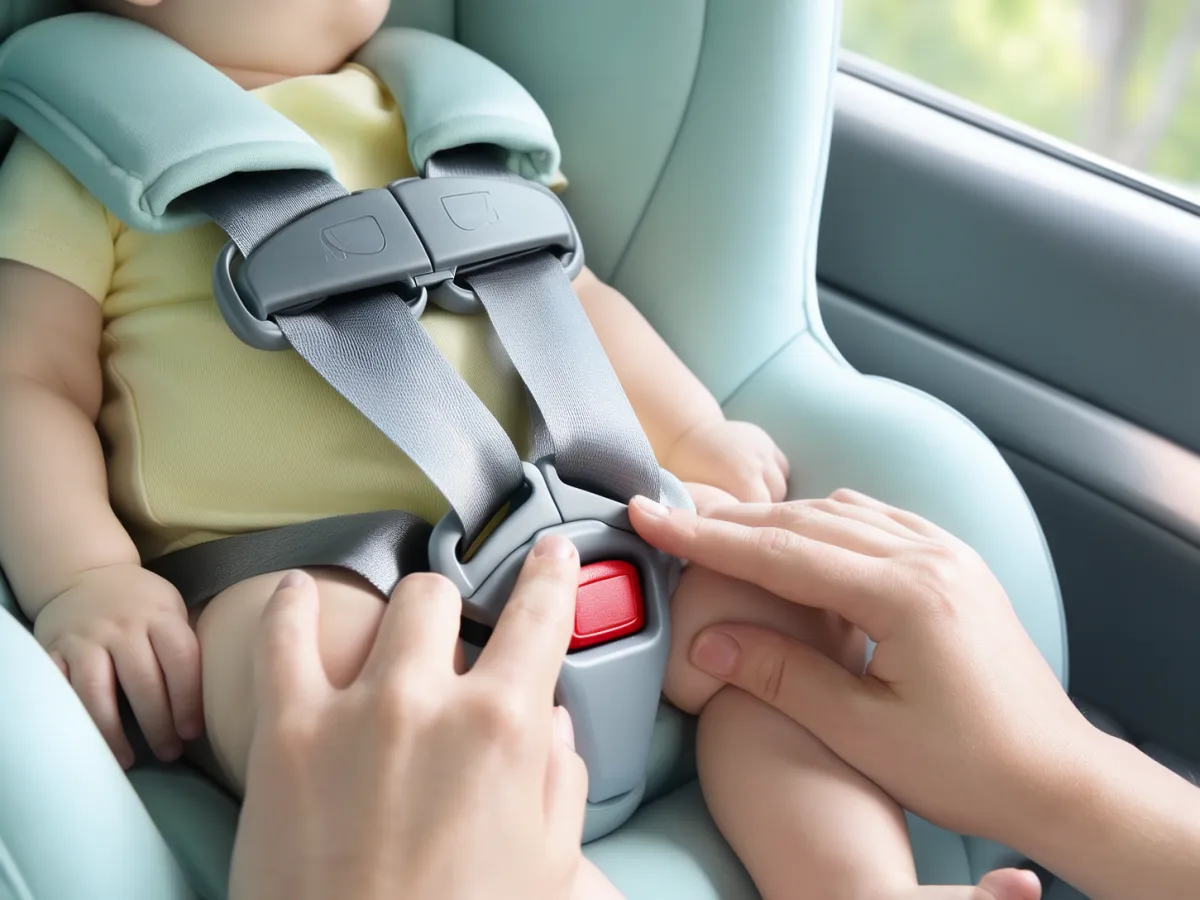
A seat can be installed perfectly and still fail if the harness is loose. Check it every ride.
- Straps flat, not twisted.
- For a rear-facing seat, the straps come out of the slots at or just below your child's shoulders. For a forward-facing seat, at or just above.
- Buckle the harness and tighten it. Then try to pinch a horizontal fold of strap at your child's collarbone. If you can pinch any slack, tighten more. This is called the pinch test.
- Slide the chest clip up to armpit level.
Winter coats
A puffy coat squashes flat in a crash, leaving the harness too loose. Take bulky coats and snowsuits off before buckling. Dress your child in thin warm layers and lay a blanket or the coat over the buckled harness.
Checking the installation
Every seat installs with either the car's lower anchors (part of the LATCH system) or the seat belt. Use one, not both, unless your seat's manual says both are allowed. Forward-facing seats should also use the top tether strap, which cuts how far your child's head moves forward in a crash.
To test the installation, hold the seat at the belt path, where the belt or anchor strap goes through, and tug side to side and front to back. It should move less than one inch.
Rear-facing seats need the right recline so a young baby's head does not fall forward and block the airway. Most seats have a level indicator on the side. Follow it.
Put the seat in the back seat. Never put a rear-facing seat in front of an active front airbag. A deploying airbag hits the back of the seat, right behind your baby's head.
Used seats, expiry dates and crashes
Plastic ages and safety standards change, so car seats have expiry dates, usually 6 to 10 years after manufacture. The date is on a label on the seat or stamped into the plastic.
A secondhand seat is only safe if you know its full history. Skip it if it has been in a crash, is missing its label or manual, is past its expiry date, or has been recalled. Check recalls by entering the model number on NHTSA's recall site.
NHTSA advises replacing a seat after a moderate or severe crash. After a minor crash you may not need to. NHTSA defines minor as all of these: you could drive the car away, the door nearest the seat was not damaged, nobody was hurt, the airbags did not go off, and you can see no damage to the seat.
Fill in and send the registration card that comes with a new seat, or register online. That is how the maker can tell you about a recall.
Car seats are for the car
Car seats are built for travel, not for sleep. A baby left to sleep in a car seat outside the car, especially with straps undone or loose, can slump and have trouble breathing. Take your baby out of the seat when you reach home, and move them to a flat crib or bassinet if they are asleep.
Never leave a child alone in a car, even for a minute. The inside of a car heats up fast, and children overheat much faster than adults. Leaving something you need, like your phone or bag, in the back seat is one simple way to make sure you look before you lock up.
Sources
- National Highway Traffic Safety Administration, Car seats and booster seats
- American Academy of Pediatrics, Car seats: information for families
- Centers for Disease Control and Prevention, Child passenger safety
This page is general information to help you ask good questions. It is not medical or legal advice. Your pediatrician, midwife or a lawyer in your state can tell you what applies to you. Last checked 16 November 2026.